
How Well Do You Know Me?
DH3 GamesTrivia
4.41.25K Reviews
- Version
- 17.3.0
- Installs
- 5.00M
- Age Rating
- Teen
Screenshots
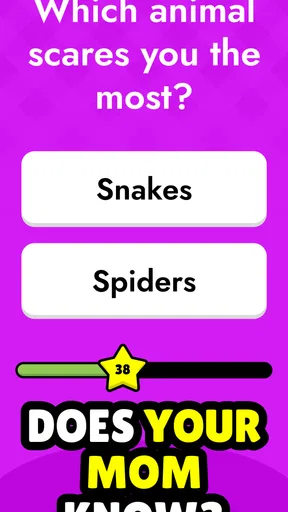
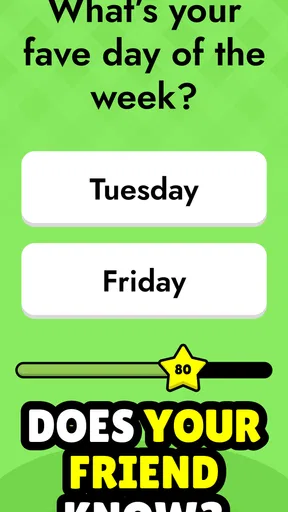
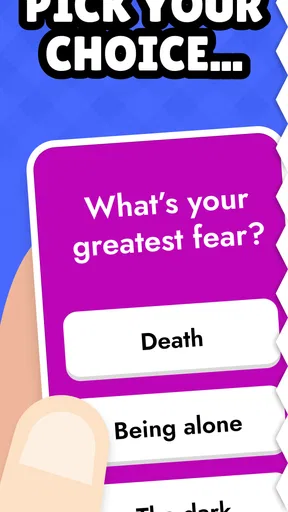
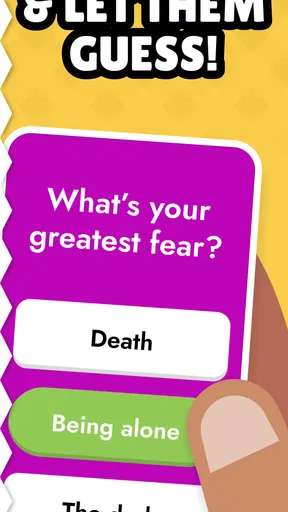
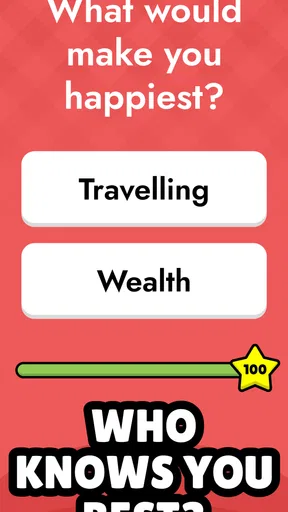
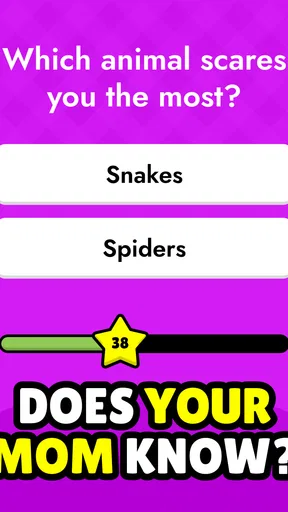
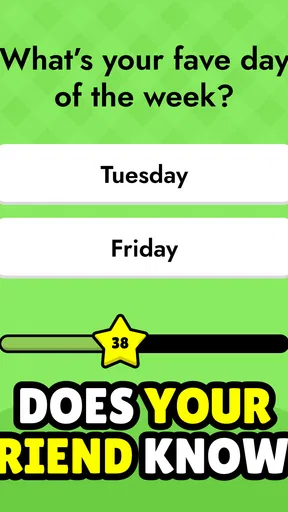
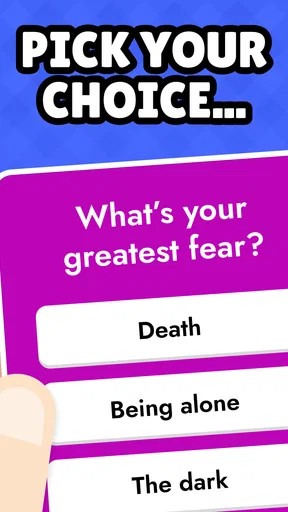
Our Review of How Well Do You Know Me?
 Analysis by Appyee
I enjoy trivia games most when the questions create conversation rather than simply proving who remembers the most facts. How Well Do You Know Me? takes that route by turning the quiz toward the people sitting beside you. It is a free game from DH3 Games in the trivia category, designed for two players who want to test how closely they understand each other.
That focus makes it feel different from a standard general-knowledge quiz. You are not competing over geography, history, or obscure entertainment facts. Instead, the fun comes from guessing how a friend, partner, sibling, or relative would answer. In my experience, the best moments happen when a seemingly obvious answer produces a disagreement and everyone starts explaining their reasoning.
The game has been available since September 10, 2017, and its established audience is reflected in an average rating of 4.4 from around 37 thousand ratings. It remains free to start, with optional in-app purchases ranging from $1.49 to $3.99 per item. The Teen content rating is worth keeping in mind, especially if you are choosing something for younger children.
How the game feels in everyday use
I find this game works best when I treat it as a shared moment, not a test to rush through. In everyday use, the useful choice is picking a time and person who can give each question a little attention; that makes even a short session feel more natural. From there, the key is noticing how each answer changes the mood, which is what makes the game’s simple rhythm worth trying.
Quick to begin, but better when both players are ready
The biggest advantage is the low barrier to entry. This is the kind of game I can imagine opening during a quiet evening, while waiting for food, or during a visit with someone I know well. It does not need the same preparation as a board game, and it avoids the pressure of a traditional competitive quiz where one player may dominate through specialist knowledge.
The basic idea is easy to understand: two people answer questions about one another and compare how accurately they can predict each other. That simplicity helps the game get moving quickly. You do not need to study rules or learn a complicated scoring system before playing. The real setup is social rather than technical: choose the right person, agree to answer honestly, and be prepared for a few surprises.
That last point matters. The experience depends heavily on the relationship between the players. With a close friend or partner, an answer can reveal a small misunderstanding that becomes funny rather than uncomfortable. With someone you barely know, the same question may feel random because there is not enough shared history to make the guess meaningful. I would therefore treat it less like a universal party game and more like a conversation tool for two people who already have some connection.
What makes the two-player format useful
Many trivia games are designed for groups, which can make them awkward when only two people are available. This one is built around a pair, so it fits a quieter situation better. I would use it on a date, during a long-distance call, or as a simple way to restart a conversation after a busy week.
The two-player structure also gives every answer more weight. In a large group, an unexpected response can disappear among several voices. Here, the entire round is about the relationship between the two participants. That can make the game feel more personal, although it also means there is less room to hide if a question touches on a sensitive subject.
A useful approach is to agree beforehand that a wrong answer is not a criticism. The point is not to prove that one person is inattentive. It is to discover how each person sees the other. I found that this small change in attitude makes the game much more enjoyable and prevents the score from becoming the only thing that matters.
Speed expectations and the rhythm of a session
From a performance perspective, this is a lightweight kind of game. The interaction is based on reading questions, selecting answers, and reacting to the result, so it should feel more immediate than a visually demanding action game. I would not choose it for impressive graphics or complex animations; its appeal is the quick movement from one question to the next.
That rhythm suits short sessions. You can play a few questions without committing to a long match, then stop when the conversation naturally moves somewhere else. It also works for a longer evening because each answer can lead to a story or debate. The app provides the prompts, but the players provide most of the entertainment.
One practical tip is to avoid treating every round as a race. If you rush through the questions, you may finish quickly but lose the personal part that makes this title distinctive. I prefer allowing a little time after surprising answers. The pause often produces more value than the question itself, especially when one player says, “I thought you knew that about me.”
Where heavier use can expose the limits
Extended play can become repetitive if the same pair keeps returning without changing the setting or the people involved. Since the central appeal comes from comparing personal knowledge, the novelty naturally decreases once both players have answered many similar prompts. This is not a technical failure, but it is an important limit on replay value.
I would handle that by using the game as a social activity rather than a daily score-chasing routine. Bring it out for a particular occasion, use it to break the ice, or return to it after a gap. It is less convincing as a main game for someone who wants constant progression, deep strategy, or a large competitive ladder.
Heavy use can also mean more interruptions from real conversation. That sounds like a weakness only if you expect uninterrupted gameplay. In this case, the interruptions are often the point. Still, players looking for a focused solo session may find the format frustrating because it needs another person and depends on both people staying engaged.
Reliability and the importance of the social connection
The game’s long availability and broad adoption suggest that it has remained accessible to a substantial audience. It has passed the five-million-install mark, which gives it the feel of an established trivia option rather than a short-lived experiment. The current version is 17.3.0, and the app is intended for Android devices running version 7.0 or later.
Those details make it a practical choice for people using older compatible phones, although compatibility alone does not guarantee that every device will feel identical. The experience can still be affected by available storage, background activity, operating-system condition, or the age of the hardware. For a game with relatively simple interaction, I would expect the main concern on an older phone to be general device responsiveness rather than demanding graphics.
Reliability here also has a human side. A technically smooth session can still fall flat if one player gives deliberately misleading answers or refuses to discuss the results. Before starting, I recommend deciding whether the goal is honest comparison, playful guessing, or friendly embarrassment. That small agreement prevents the game from turning into an argument over what counts as a fair answer.
Another useful habit is to take turns being the person whose preferences are being guessed. If one player answers every round while the other only reacts, the experience quickly feels unbalanced. Alternating roles keeps both participants involved and makes the result more informative. It also reduces the chance that one person feels examined rather than included.
Device constraints and practical expectations
The minimum operating-system requirement of Android 7.0 or later keeps the entry point reasonably broad for Android users. I would still check the phone’s available space and update status before installing, particularly on an older device that is already close to its limits. A trivia game should not demand the same resources as a modern 3D title, but a crowded or aging phone can make any app feel slower.
Because the game is designed around two people sharing an experience, screen size can affect comfort. A small display may be perfectly usable for one player holding the phone, but passing it back and forth can become awkward. A larger phone or a stand can make the session easier, especially when both people want to read the question and discuss it together.
Battery demand is unlikely to be the reason someone chooses or rejects this particular title. The more relevant constraint is attention. If you are playing in a noisy room, on public transport, or while multitasking, the personal questions may not receive enough thought to be satisfying. It works best when both players can give the exchange at least a little uninterrupted focus.
The Teen rating also affects who I would recommend it to. Families should consider whether the subject matter and tone suit the players rather than assuming that every trivia app is automatically appropriate for children. For teenagers and adults, the rating is a helpful reminder that this is aimed at a more mature audience than a basic educational quiz.
Free access and the role of optional purchases
Starting for free makes it easy to try the format before spending anything. That is important here because the real question is not whether the app technically works; it is whether you and another person enjoy being tested on your relationship. I would play the free version first and only consider an optional purchase if the available content becomes a regular part of your social routine.
The listed in-app purchases are priced per item, from $1.49 to $3.99. I see that as a reason to make deliberate choices rather than buying automatically after one enjoyable session. If you only want a quick activity for a single evening, the free starting point may be enough. If you plan to use it repeatedly with different friends or as a couple’s conversation game, additional content may feel more worthwhile.
The trade-off is straightforward: a free download lowers the risk, while optional spending may matter to players who want more variety. I would not recommend purchasing simply to make the game feel more serious. Its value comes from the people playing and the discussions that follow, not from collecting every available item.
How it compares with ordinary trivia alternatives
Compared with a general-knowledge quiz, this game replaces factual expertise with familiarity. That makes it a better choice when the players want to learn about each other, but a weaker choice when they want objective questions with clearly correct answers. Someone who enjoys competing over science, sports, or world events may prefer a conventional trivia app.
It also differs from a large party quiz because it is intentionally intimate. A group-oriented alternative offers more voices, more chaos, and often more energy. This two-player format is calmer and more focused. That is an advantage for couples or friends who do not want to organize a group, but it is a disadvantage if your main goal is a lively room full of participants.
Against conversation-card apps, it sits somewhere in the middle. Conversation cards may encourage longer personal answers, while this game adds the extra tension of guessing correctly. If you want structured prompts with a clear playful challenge, I would choose this one. If you want deep discussion without any scoring pressure, a conversation-focused alternative may suit you better.
Three ways to get more from each round
First, play with a specific purpose instead of opening it without a plan. For example, a couple could use a short session to compare expectations before a holiday, while two friends could use it to revisit memories from school. The questions become more meaningful when they connect to a real relationship rather than filling empty time.
Second, treat disagreements as prompts for explanation. Do not immediately move on after a wrong guess. Ask what made the answer seem obvious to the other person. This turns the game into a low-pressure way to notice different habits, priorities, and memories. It is a stronger use of the app than simply counting correct predictions.
Third, stop while the mood is still good. Because the format depends on conversation, pushing through too many rounds can make it feel like an obligation. A short, lively session is often better than exhausting the available interest. This is one of the main trade-offs: the app can improve a social moment, but it cannot replace genuine enthusiasm between the players.
Who should try it, and who should skip it
I recommend it to friends, partners, siblings, and relatives who enjoy playful personal questions. It is especially useful when two people want an activity that is more engaging than simply scrolling through their phones but less demanding than learning a complicated game. The free entry point also makes it sensible for curious users who want to test the idea without committing money first.
I would skip it if you mainly want solo play, detailed strategy, fast action, or a constantly expanding competitive challenge. It is also not the best choice for people who dislike revealing preferences or who become genuinely upset when another person guesses incorrectly. In those situations, a standard trivia game with impersonal facts will probably create less friction.
My performance verdict
On performance, I see this as a modest, focused game rather than a resource-hungry one. Its design is built around short question-and-answer exchanges, so the expected strength is responsiveness and convenience, not visual spectacle. It should fit naturally on compatible Android devices, including older ones that meet the operating-system requirement, provided the phone itself is in reasonable condition.
Its strongest form of “recovery” is practical rather than technical: if a session loses momentum, you can stop after a few questions and return later without losing the main point of the activity. There is no need to force a long match. If a question creates tension, changing the subject or taking a break is also more sensible than treating the score as something that must be completed.
My final view is positive, with clear expectations. This is best understood as a relationship quiz with a trivia-game structure, not as a replacement for a full general-knowledge challenge. DH3 Games has made something approachable for two people, and the established rating and install base show that the concept has found a sizable audience. I would recommend trying it with someone you already know well, keeping the mood light, and judging it by the conversations it starts rather than by how many rounds you complete.
Verdict
Strengths of How Well Do You Know Me?
- Fun way to compare answers with friends or a partner
- Simple questions make it easy for anyone to participate
- Useful for starting conversations and discovering shared interests
- Suitable for casual gatherings, dates, and group activities
- Quick rounds keep the experience light and engaging
Limitations of How Well Do You Know Me?
- Some questions may feel repetitive after several rounds
- Personal answers can occasionally lead to awkward moments
- Limited appeal if you prefer solo games or puzzles
- Question quality may vary depending on the selected mode
- Requires comfortable social interaction to be enjoyable
Other Releases by DH3 Games
View All
BFF Friendship Test
Trivia4.4
Similar Picks in This Category
View All
Millionaire 2026 Quiz & Trivia
Quiz & Trivia Games by Submarine Apps4.5

Brain Test 2: Tricky Stories
Unico Studio4.7

Trivia Crack: Brain Quiz Games
etermax4.4

QuizzLand. Quiz & Trivia game
Quiz & Trivia Games by Mno Go Apps4.8

Brain Test: Tricky Puzzles
Unico Studio4.7

Logo Quiz
bubble quiz games4.5
Frequently Asked Questions
What is How Well Do You Know Me?
How Well Do You Know Me? is a quiz and party-style app designed to test how well friends, couples, family members, or other groups understand one another. Players answer personal questions and compare their responses, making it suitable for casual gatherings, conversation starters, and relationship challenges. The experience focuses on fun, discovery, and friendly competition rather than formal personality analysis.
How do you play How Well Do You Know Me?
To play, one person typically answers questions about their preferences, habits, opinions, or personality, while the other participants try to predict those answers. After everyone responds, the answers are compared and points may be awarded for correct guesses, depending on the game mode. The app works best when players take turns and answer honestly, while keeping the atmosphere relaxed and respectful.
Is How Well Do You Know Me? suitable for couples and friends?
Yes, the app can be used by couples, close friends, relatives, classmates, or groups looking for an entertaining way to learn more about each other. Some questions may be light and humorous, while others can encourage more personal conversations. Before starting, it is a good idea to agree on boundaries, especially if the group includes children or people who do not know each other well.
Does How Well Do You Know Me? require an internet connection?
The connection requirements can depend on the version of the app and the features available on your device. Basic question-and-answer gameplay may work without a constant connection if the relevant content is already installed, but advertisements, updates, online sharing, or certain multiplayer functions may require internet access. Check the app-store description and permissions before downloading for the most accurate information.
Is How Well Do You Know Me? free to download and safe to use?
The app may be available as a free download, although some versions can include advertising, optional purchases, or additional question packs. Because questions may involve personal information, players should avoid entering sensitive details and review the app’s privacy policy before using social or sharing features. Downloading it from the official Google Play Store or Apple App Store is the safest option.
Play our best games!


